The Settlement Offer That Arrives Before the Bruises Have Faded

The Settlement Offer That Arrives Before the Bruises Have Faded

She told me she almost signed. Three days after a rear-end collision on I-275, still taking ibuprofen every four hours, still sleeping on her side because her neck wouldn’t let her lie flat—and she was holding a release form and a check for $4,200. The adjuster had been warm, professional, quick to call back. He said the offer was fair given the circumstances. She said she felt guilty even hesitating.

That moment—the gap between the first offer and the first full medical evaluation—is where I spend most of my professional attention. Because what happens in that window can shape someone’s financial reality for years.

What Usually Happens in the First Week

The accident itself is disorienting enough. Then comes the paperwork, the rental car calls, the missed work, the icing and re-icing of whatever hurts. Most people are not thinking about claim strategy. They’re thinking about getting back to normal.

That’s exactly when the insurance adjuster calls.

The adjuster’s job is not adversarial in a theatrical sense—they’re not twirling a mustache. But their role is structurally misaligned with yours. They work for the insurer. Their performance metrics involve closing claims efficiently. And the fastest, cheapest close happens when the injured party hasn’t yet seen a specialist, hasn’t yet received imaging results, and hasn’t yet consulted anyone who explains what a claim release actually does.

The call is usually friendly. The offer sounds concrete. And for someone who is exhausted, in pain, and worried about bills, “concrete” feels like safety.

Here’s what that first offer typically reflects: the visible, immediate costs. Your ER copay. Maybe a few days of missed work if you mentioned it. The adjuster has your initial medical report—probably from urgent care or the ER—which documents acute symptoms but says nothing about what happens in week three when the headaches don’t stop, or month two when your orthopedist recommends an MRI that reveals a herniated disc that wasn’t visible on the original X-ray.

The offer is priced on what they know. Not on what’s coming.

The Costs That Haven’t Appeared Yet

This is where the real risk lives—and it’s worth slowing down here.

Soft tissue injuries—whiplash, muscle tears, ligament strains—are notoriously slow to declare themselves. The adrenaline of an accident masks pain acutely. Inflammation builds over days. Neurological symptoms from spinal involvement sometimes don’t appear for weeks. I’ve seen cases where the injured party felt “mostly okay” at day four and was in physical therapy three times a week by week six.

Consider the categories of cost that a day-three offer routinely ignores:

Cost CategoryWhat Adjusters IncludeWhat’s Often Missing
Medical expensesER visit, urgent care copaySpecialist visits, imaging, future treatment
Lost wagesDays explicitly mentionedPartial capacity work, contractor income loss
Out-of-pocket costsInitial prescriptionsFollow-up MRIs, pain management referrals
Non-economic damagesRarely addressedPain and suffering, functional limitations

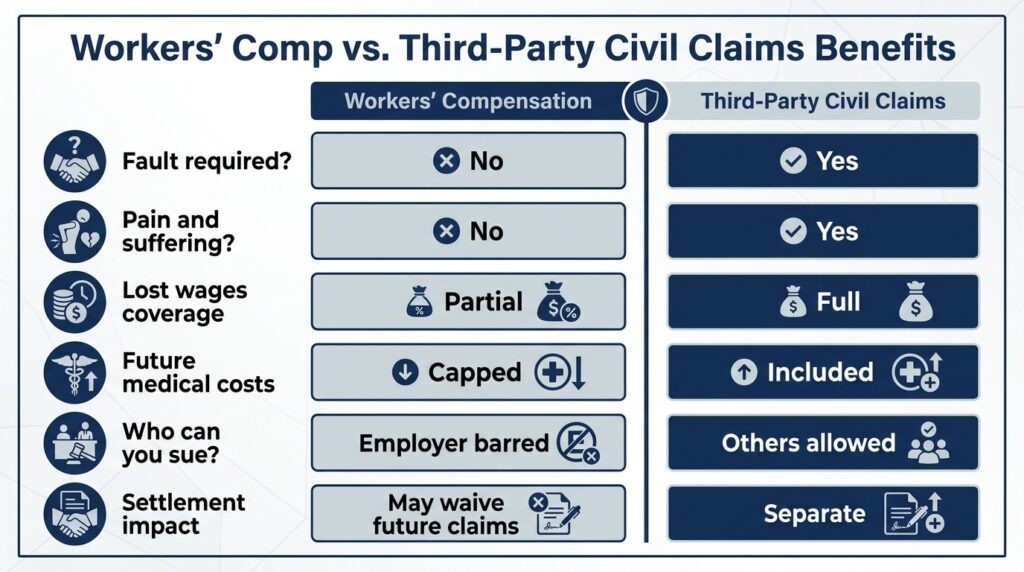
Future medical expenses are a legitimate, compensable part of your claim. The DOJ’s framework for personal injury compensation explicitly includes both current medical bills and anticipated future treatment costs, alongside non-economic damages like pain and suffering. An early offer almost never accounts for future care because the adjuster doesn’t have—and frankly doesn’t want—a specialist’s prognosis in hand before you sign.

Wage loss compounds quietly. Maybe you went back to work at partial capacity. Maybe your job involves physical demands you haven’t tested yet. Maybe you’re a contractor and the income disruption is harder to document but very real. None of that gets priced into a day-three offer.

And then there’s the category people least expect: the out-of-pocket costs that arrive after the settlement check clears. A follow-up MRI. A referral to a pain management specialist. A prescription that your health insurance doesn’t fully cover. Once you’ve signed a claim release, those bills belong entirely to you.

How the Adjuster Values Uncertainty—and Why That Works Against You

Insurance pricing is built on probability models. Adjusters understand this intuitively even if they don’t say it out loud.

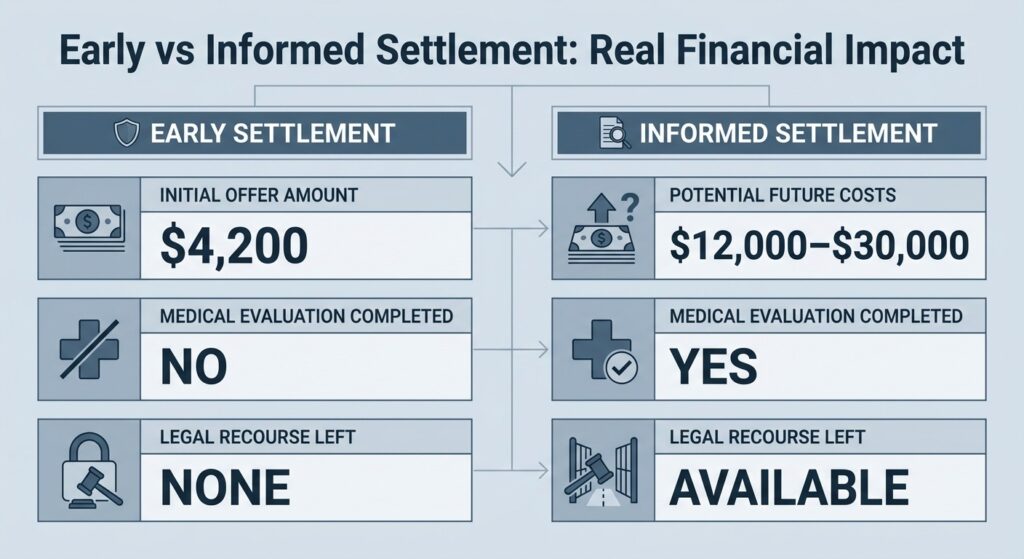
When your injury picture is incomplete, the claim has uncertainty—and uncertainty is something insurers price to their advantage, not yours. If an adjuster offers you $4,200 before your specialist visit, and your specialist later documents $18,000 in future treatment needs plus significant functional limitations, the adjuster just saved their company roughly $14,000 or more. That’s not cynicism—that’s the structural logic of early settlement offers. Legal guidance from the American Bar Association is consistent on this point: personal injury lawyers routinely advise clients not to accept initial offers until the full extent of injuries is understood, precisely because early offers are made before future treatment needs are established. 

The adjuster also knows something about leverage that most injured people don’t: your anxiety is working for them.

The fear that you’ll somehow miss your window, that the offer will evaporate, that waiting is greedy or risky—that fear is a negotiating asset for the insurer. It costs them nothing to let you sit with it. What’s actually true about timing? Florida’s statute of limitations for personal injury claims gives you meaningful time to make an informed decision. Filing deadlines by state vary, but most jurisdictions allow two to four years for personal injury suits—time that exists precisely so injured parties can understand what they’re dealing with before making permanent decisions. The offer won’t disappear if you take a few weeks to get a proper medical evaluation.

What a Claim Release Actually Means

A claim release is not a receipt.

It’s a legal document that typically extinguishes your right to pursue any further compensation from that insurer for that accident—permanently, regardless of what you discover later. The language is usually broad. “Any and all claims, known and unknown, arising from the incident described herein.” That phrase is doing serious legal work.

The injured party who signs on day three doesn’t know yet that they have a herniated disc. They don’t know yet that they’ll need six months of physical therapy. They don’t know yet that their chronic headaches will require a neurologist. But the release doesn’t care what they know. It closes the door.

This is why gathering complete documentation before you sign matters so much:

  • Medical records and specialist evaluations
  • Imaging results (X-rays, MRIs, CT scans)
  • Employer documentation of missed work and reduced capacity
  • Bills, prescription receipts, and out-of-pocket expense records
  • Written communications with the adjuster

Not because you’re building a lawsuit. Because you’re making a permanent financial decision and you deserve to make it with complete information.

Addressing the Worry Directly: “What If I’m Being Greedy?”

I hear this concern often. It’s doing real harm to real people, and I want to address it plainly.

Asking for time to understand your injuries is not greed. It’s basic financial literacy applied to a high-stakes decision. You wouldn’t sign a contract to sell your house three days after listing it, without an appraisal, because a buyer called quickly and sounded friendly. The same logic applies here.

The shame around negotiating an injury claim is, in my observation, partly manufactured. The framing that injured people are “lottery seekers” or “dragging things out” serves the interests of insurers who benefit from quick closes. The reality is that most people asking these questions just want to know they’re not leaving their family exposed to costs they can’t absorb.

Pausing is not aggressive. It’s not litigious. It’s not greedy. It’s what a careful person does when the decision is irreversible.

Two Paths: What the Outcomes Actually Look Like

The difference between signing early and waiting is not abstract. Here’s what it looks like in practice.

Path A — The Early Signature

You accept $4,200 on day three. You feel relieved. Two months later, your MRI shows a disc herniation. Your doctor recommends injections and possibly surgery. Your out-of-pocket exposure is $12,000 to $30,000 depending on your insurance. The claim release you signed means you have no recourse. The $4,200 is gone. The bills are yours.

Path B — The Informed Decision

You tell the adjuster you need time to complete your medical evaluation before discussing settlement. You see your primary care physician, get referred to a specialist, complete imaging. You gather your documentation. You consult a personal injury lawyer—not necessarily to file suit, but to understand what your claim is actually worth and what the release language means before you sign it. You make a decision with complete information.

The second path doesn’t require you to be adversarial. It doesn’t require litigation. It just requires that you treat this decision with the same care you’d give any other permanent financial commitment.

Consulting an attorney early doesn’t obligate you to anything. Most personal injury lawyers offer free initial consultations and can tell you quickly whether your situation warrants deeper review. If you’re outside Florida and navigating a similar situation, even a brief conversation with an accident attorney boston or wherever you’re located can clarify whether the offer you’ve received reflects your actual exposure.

Three Steps Before You Sign Anything

If you’re in that window right now—offer in hand, not sure what to do—here’s what I’d suggest.

1. Complete your medical evaluation first. Don’t let the settlement timeline drive your healthcare timeline. See your doctor. Get the referrals. Get the imaging. Let the clinical picture develop before you make a legal decision. This is the single most important step, and it’s the one most people skip because the adjuster’s call feels urgent.

2. Document everything, in writing. Medical records, bills, prescription receipts, pay stubs showing missed work, written communications with the adjuster. Documentation is what transforms a vague sense of harm into a substantiated claim. You need it whether you settle early or later—and gathering it costs you nothing but time.

3. Have one conversation with a personal injury lawyer before you sign. Not to start a lawsuit. Just to understand what you’re signing away, what your claim might actually be worth with complete information, and whether the release language is as broad as it usually is. That conversation costs you nothing and could protect you from a decision you can’t undo.

You are allowed to take time. You are allowed to ask questions. You are allowed to say “I need to understand this fully before I decide.”

That’s not delay. That’s exactly what a careful person does.

Facebooktwitterredditpinterestlinkedinmail

Can You Always Sue Someone After A Motor Vehicle Accident?

Examining The Role Of Fault In Legal Action After An Accident

When a motor vehicle accident occurs, the initial question is often “Who was at fault?” This determination plays a critical role in deciding whether you can pursue legal action. If the other party acted negligently—such as texting while driving or running a red light—you may have strong grounds for a lawsuit. However, if responsibility is unclear or shared, your ability to sue could be more complicated due to comparative and contributory negligence rules.

Considering The Severity Of Injuries And Property Damage

Not every collision automatically leads to a lawsuit. Minor fender benders with minimal property damage and no injuries often resolve through insurance claims alone. Lawsuits tend to arise when medical bills are substantial, injuries are long-lasting, or vehicles are severely damaged. The more significant the impact on your life, the stronger your case may be for seeking compensation beyond basic insurance remedies.

The Importance Of Insurance And State-Specific Laws

Many states, including Florida, are “no-fault” jurisdictions, which means you must first file claims through your own insurer after a motor vehicle accident. Laws may limit your right to sue unless your injuries meet a specific threshold, such as “serious injury.” It’s essential to understand your state’s requirements, as well as how policy limits and coverage details affect your claim options and possible lawsuit eligibility.

Weighing The Evidence And Documentation Required To Sue

Successfully suing someone involves gathering substantial evidence. This could include police reports, medical records, eyewitness statements, and photo documentation of the scene. Poor documentation or conflicting accounts can undermine your case, making it harder to prove negligence. Consulting with an attorney can help you understand if you have enough proof to proceed and what additional steps to strengthen your claim may be necessary.

Exploring Alternatives To Litigation For Accident Compensation

Suing is not always the best or most necessary route after an accident. Many disputes are resolved through settlement negotiations, mediation, or arbitration—especially if both parties prefer to avoid the expenses and uncertainties of a trial. These alternatives often provide fair compensation more quickly and can be less adversarial, allowing everyone to move forward sooner.

Making Informed Decisions For Your Accident Recovery

Ultimately, not every motor vehicle accident results in a lawsuit. The path to compensation is shaped by the circumstances of the crash, state laws, insurance policies, and the strength of collected evidence. Knowing which factors affect your right to sue empowers you to make wise choices, seek appropriate legal advice, and ensure a smoother recovery process.

Facebooktwitterredditpinterestlinkedinmail

Who Is Responsible If You’re Hurt In An Uber Accident?

Identifying The Different Parties Involved In Uber Accidents

Being injured in an Uber accident can quickly become a confusing legal situation, especially since multiple parties could bear responsibility. Unlike traditional taxi services, Uber drivers are considered independent contractors, not company employees. This distinction complicates matters when determining liability, as both Uber and the driver’s personal actions must be evaluated. Depending on the circumstances, other motorists involved may also share some of the responsibility for your injuries.

Understanding Uber’s Insurance Coverage And When It Applies

Uber provides commercial insurance coverage for its drivers, but when and how it applies depends on the driver’s status at the time of the accident. If the driver was actively transporting a passenger or en route to pick someone up, Uber’s $1 million liability policy generally takes effect. However, coverage may shift if the driver was waiting for a ride request or off duty, potentially leaving gaps that fall to the driver’s personal auto insurance instead.

Exploring The Role Of The Uber Driver In Accident Responsibility

While Uber does offer significant insurance protection, the individual driver’s actions remain critical in assessing fault. Drivers must follow traffic laws, practice safe driving, and avoid dangerous behaviors such as speeding or texting while driving. If your injuries resulted directly from the Uber driver’s negligence, you may be able to pursue compensation through their personal insurance or Uber’s policy, depending on the specifics of the ride at the time of the crash.

Considering Other Potentially Liable Parties In Uber Accidents

Responsibility for an Uber accident isn’t limited solely to the company and its driver. If another motorist caused the collision—by running a red light or driving under the influence, for example—they could be held liable for your injuries. Pedestrians, cyclists, or even local government entities responsible for road safety may also play a role if their actions or negligence contributed to the accident.

Steps To Take Immediately After An Uber Accident Injury

Protecting your rights after being hurt in an Uber accident starts with gathering evidence and seeking medical attention. Collect details like the driver’s information, witness contact numbers, and photographs of the crash scene. Contact law enforcement for an official report and notify Uber about the incident through their app or customer service. Consulting an experienced attorney can clarify which insurance coverage applies and guide you through the process of pursuing compensation.

Final Thoughts On Navigating Uber Accident Claims

Untangling liability after an Uber accident takes careful consideration of all parties’ actions and insurance policies. Understanding your rights and the unique structure of rideshare insurance empowers you to pursue the compensation you deserve while focusing on your recovery. Taking quick action and obtaining professional advice will help protect your interests every step of the way.

Facebooktwitterredditpinterestlinkedinmail

Hiring A Personal Injury Attorney In Crestview: How To Choose

Assessing Your Legal Needs After An Injury Incident

Experiencing a personal injury can leave you physically and emotionally overwhelmed. While recovering, you may also face mounting bills and lost wages. This is when finding a qualified personal injury attorney in Crestview becomes crucial. Start by assessing your situation—what type of injury did you sustain, and how severe is it? Knowing your needs will help you find a lawyer who specializes in handling cases similar to yours.

Researching Attorneys’ Experience And Specialization Is Vital

Every legal claim is unique, so your attorney’s background matters. Look for a lawyer with substantial experience in personal injury law, especially one who is familiar with Crestview’s local courts and regulations. Examine their track record: Have they won cases like yours, and do they understand the challenges specific to your type of injury? The right specialization gives you an immediate edge in pursuing compensation.

Evaluating Reputation Through Reviews And Referrals

A reputable attorney will have strong ratings and positive client testimonials. Check independent review sites, legal directories, and even social media for real opinions. If possible, ask friends, family, or local professionals for recommendations. Pay attention to whether the attorney is described as responsive, caring, and knowledgeable. A personal injury attorney in Crestview with a trusted reputation will likely provide a smoother and more supportive experience.

Meeting Potential Attorneys For Initial Consultations

Most attorneys offer a free initial consultation. Use this opportunity to ask about their previous cases, approach to negotiations, and comfort level with going to trial if necessary. Notice whether they listen closely, answer questions thoroughly, and make their process easy to understand. Your comfort and confidence during this meeting can be a strong indicator of future communication.

Understanding Fee Structures Before Making A Commitment

Personal injury lawyers generally work on a contingency fee basis, meaning they only get paid if you win your case. Still, it’s important to clarify what percentage they’ll take and what, if any, additional costs you might incur. Get all fee agreements in writing and make sure you fully understand them, so there are no unwelcome surprises as your case progresses.

Communication And Accessibility Throughout Your Case

Good legal representation involves more than just skill—it also requires clear, ongoing communication. Find out how often you’ll receive updates and whether you’ll deal directly with your attorney or be passed to staff. Prompt and transparent communication not only keeps you informed but also helps build trust during this challenging time.

Making Your Final Decision With Confidence

Choosing the right attorney hinges on research, candid discussions, and a clear understanding of your goals. With the right legal support, you increase your chance of a fair and timely outcome—allowing you to focus on recovery while your attorney fights for your rights.

Facebooktwitterredditpinterestlinkedinmail

There Are Lots Of Good Personal Injury Lawyers In Fort Walton Beach

Why Experience Matters When Choosing Your Attorney

Navigating the aftermath of an accident can be overwhelming, especially when facing medical bills and lost income. That’s why choosing the right Fort Walton Beach personal injury lawyer is essential. Experience counts for more than just years on the job; it’s about knowledge of local laws and courtroom strategies. An accomplished attorney will know how to build a persuasive case, from collecting evidence to negotiating with insurers or taking matters to trial.

Local Expertise Creates A Strategic Advantage

Fort Walton Beach is a unique community, with its own legal nuances and court procedures. Hiring a lawyer who not only specializes in personal injury cases but also knows the local system provides significant benefits. They understand area judges, common defense tactics, and local jury expectations. This local insight helps anticipate challenges and seize opportunities, improving your odds for maximum compensation.

Personal Service And Clear Communication Throughout Your Case

The best lawyers offer more than legal knowledge—they provide empathy, accessibility, and guidance during a difficult time. Top Fort Walton Beach personal injury lawyers keep clients informed, answer questions promptly, and ensure important decisions are made together. Regular updates about your case’s status, upcoming deadlines, and settlement options empower you to feel confident while the legal process unfolds.

Reviews And Referrals Help You Narrow Your Choices

Selecting an attorney may seem daunting with so many choices available. Start by reading reviews on trusted legal directories and social media groups. Seek recommendations from friends, family, or other professionals in Fort Walton Beach who have firsthand experience. Consistent feedback about reliability, success rate, and compassion can help you identify the right match for your needs and personality.

Making The Most Of Your Initial Consultations

Most personal injury attorneys offer free consultations for new clients. Bring all questions—about fees, strategy, and possible outcomes—to this meeting. Evaluate how transparent and thorough their answers are, as well as their willingness to listen to your concerns. A strong Fort Walton Beach personal injury lawyer will address your worries directly and set realistic expectations, providing confidence for the road ahead.

Taking The Next Step Toward Your Recovery

Ultimately, working with a trusted attorney gives you the best shot at fair compensation and peace of mind. Investing time in choosing wisely means you’ll have effective support every step of the way. With so many dedicated professionals in Fort Walton Beach, you’re in a great position to find legal help tailored to your case and your future recovery.

Facebooktwitterredditpinterestlinkedinmail

How Much Can A Medical Malpractice Lawyer In Pensacola Help You Win?

Understanding The Complexity Of Medical Malpractice Claims

Medical malpractice cases involve a unique set of challenges, from proving negligence to interpreting complex medical records. Victims often face serious health setbacks, financial worries, and emotional distress, making expert legal representation crucial. A medical malpractice lawyer in Pensacola specializes in building strong cases that uncover errors, consult with expert witnesses, and ensure that injured clients have a voice in courtrooms dominated by large hospitals and insurance companies.

Determining The Value Of Your Injury Compensation

One of the most significant ways a medical malpractice lawyer can help is by assessing the full value of your damages. They examine the extent of physical injuries, future care needs, lost earnings, and the emotional costs you’ve endured. With their guidance, you’ll avoid undervaluing your claim, ensuring all financial, physical, and psychological impacts are accounted for during settlement negotiations or trial presentations.

Navigating The Legal Process To Maximize Your Settlement

Medical malpractice lawsuits involve strict deadlines and procedural requirements. Your lawyer will manage evidence gathering, expert testimony coordination, and all filings, keeping your case on track. A medical malpractice lawyer in Pensacola is well-versed in Florida’s legal landscape, giving you an edge in negotiations with defense attorneys and insurers. Their familiarity with local judges and court rules can help streamline the process and maximize your settlement potential.

Holding Doctors And Hospitals Accountable For Their Mistakes

Beyond financial compensation, experienced attorneys play an essential role in holding healthcare providers accountable. By thoroughly investigating your case, they shine a light on harmful practices or oversights, encouraging improvements in patient safety. This accountability not only brings a sense of justice for you but also helps protect future patients from similar errors, contributing to better care standards in Pensacola.

The Importance Of Expert Guidance In Difficult Times

Dealing with the aftermath of medical negligence is overwhelming, especially when facing resistance from powerful institutions. Having a knowledgeable lawyer at your side offers not only practical help but also emotional support and reassurance that your rights are being protected. Their expertise in understanding medical law and insurance negotiations ensures you won’t face the system alone.

Your Next Steps Towards A Fair Resolution

If you or a loved one has been harmed by a medical mistake, consulting with a skilled attorney is the wisest move. With the right legal help, you can recover fair compensation, drive change in healthcare standards, and focus on healing. Pensacola’s dedicated professionals stand ready to help you secure the outcome you deserve.

Facebooktwitterredditpinterestlinkedinmail

Will Accident Lawyers In Pensacola Give You A Free Consultation?

The Growing Trend Of Free Consultations For Accident Victims

Facing the aftermath of an accident can be confusing and stressful, especially when you’re unsure about your legal options. Fortunately, many law firms today recognize the importance of making legal guidance accessible from the very first step. For this reason, it is now a common practice for an accident lawyer in Pensacola to offer a free initial consultation. This valuable opportunity allows you to get professional advice without any upfront cost or obligation.

Young frustrated woman sitting in the damaged car after a car accident, making a phone call.

What To Expect During Your Initial Legal Consultation

During your free consultation, you’ll have a chance to share the details of your accident, ask questions about your rights, and discuss possible next steps. The lawyer will listen carefully, offer feedback, and explain whether you have a viable case. This first meeting is also your opportunity to evaluate the lawyer’s communication style, experience, and willingness to take your concerns seriously before making any commitment.

How Free Consultations Make Legal Help More Accessible

Free consultations can level the playing field for accident victims who might otherwise hesitate to seek legal help due to financial concerns. Meeting with an accident lawyer in Pensacola at no cost gives you important information about your case as well as peace of mind. You won’t have to worry about hidden fees, and you can make an informed decision on whether or not you wish to proceed with pursuing compensation.

Understanding What’s Included—And What’s Not—For Free

While the initial consultation is typically free, it’s important to clarify exactly what services are included at this stage. The purpose of this meeting is to discuss the basics of your situation and potential strategies moving forward. Should you choose to hire the lawyer, most work will transition to a contingency fee arrangement—meaning payment is only due if there’s a successful outcome—which should also be clearly explained upfront.

Taking The First Step Towards Recovery With Confidence

By offering free consultations, Pensacola accident lawyers empower victims to pursue justice without financial barriers. This first meeting is an excellent chance to get clarity, assess your options, and explore the potential for compensation after an accident. If you’ve been injured, don’t hesitate to reach out for a consultation—there’s nothing to lose and potentially much to gain for your recovery.

 Making Your Legal Journey Smoother

Navigating the aftermath of an accident is difficult enough without the added stress of legal uncertainties. Free consultations provide a welcoming starting point and help you build a trusted attorney-client relationship from day one. With this first step, you can move forward with confidence and focus on your healing process.

Facebooktwitterredditpinterestlinkedinmail

Checklist For Hiring A Personal Injury Lawyer In Pensacola

Understanding Your Specific Needs For Legal Representation

Hiring the right attorney starts with clarifying what you need from your legal counsel. Do you have medical bills, lost wages, or ongoing pain due to someone else’s negligence? Decide whether your case involves car accidents, slip-and-falls, or workplace injuries, as each scenario may require specialized expertise. By narrowing your needs, you’ll be better equipped to hire a personal injury lawyer in Pensacola who understands the nuances of your situation.

Researching Lawyers’ Experience And Track Record In Personal Injury

Experience and a proven track record matter when your financial and physical recovery is on the line. Look for lawyers who focus primarily on personal injury cases and have successfully handled claims similar to yours. Research their background in negotiation and trial, as both skills are important for securing fair settlements or winning in court. A seasoned attorney increases your chance of achieving a favorable outcome.

Reviewing Client Feedback And Independent Testimonials Online

Client reviews and testimonials provide valuable insight into how lawyers treat their clients and manage cases. Browse legal directories, social media, and independent review platforms for honest feedback. Pay close attention to comments about reliability, transparency, and communication. A personal injury lawyer in Pensacola praised for their responsiveness and compassion will likely provide the supportive guidance you need during this challenging time.

Meeting Face-To-Face And Asking Key Questions

Schedule consultations with shortlisted attorneys to discuss your case in person. Prepare questions about their experience, approach to similar cases, fee structure, and ability to keep you informed throughout the legal process. These meetings allow you to gauge whether the attorney is attentive, thorough, and easy to communicate with—qualities that are essential for a successful attorney-client relationship.

Understanding Fee Structures And Potential Costs Upfront

Before making a final decision, ensure you clearly understand how fees are structured. Most personal injury lawyers work on a contingency fee basis, meaning you pay only if you win your case. Confirm their percentage, any potential additional costs, and get everything in writing to avoid surprises. Knowing your financial commitments in advance brings peace of mind and helps build trust right from the start.

Trusting Your Instincts As You Make The Final Choice

Choosing a personal injury lawyer isn’t just about credentials—it’s also about trust and comfort. If you feel confident and supported after your research and meetings, you’re likely making the right choice. The right lawyer will pursue your best interests and help secure the compensation and resolution you deserve, letting you focus on recovery and moving forward.

Facebooktwitterredditpinterestlinkedinmail